Wednesday, September 30, 2009

First Thursday - Book Signing

We will be having our inaugural

"First Thursday--An Evening with the Author"

tomorrow, October 1, 2009, beginning at 6:00p.m.

Dr. Regesh will be on hand to discuss and sign his provocative book:

Saint Paul, The First Antichrist-- Deception and Dogma

The book that changes everything.

Dr. John Ben Regesh shares a fascinating revelation of his own as he closely examines ancient scripture to expose what he sees to be the fraudulent teachings of one of the most influential ‘Christians’ in history.

By laying out the writings of Saint Paul and comparing relevant passages with the teachings of Jesus Christ, Dr. Regesh reveals where he sees the error of Paul’s teachings without conjecture, theory, or supposition.

Using passages from the Bible, Regesh's indictment against Paul is constructed before your very eyes. The truth of this book stands against any attack and promises to cause a whirlwind of controversy and consternation throughout Christianity.

You will also be introduced to concepts like the eighth day of creation, moving from darkness to light and death to life, the Creation Continuum, and how John 21 is actually the demotion of Peter from leader of the Church. Finally, the true reason that Christmas is on the 25th of December.


About the Author:

Growing up in a strict Roman Catholic family, Dr. John Ben Regesh, J.D., spent most of his life studying theology and scripture, including successfully translating the New Testament from Latin. Dr. Regesh has practiced law since 1977 and preached the last ten years to a small but active congregation. He is the Archbishop of The Christian Church in Texas and is currently working on his next book that explains the true teachings of Jesus Christ and the Law.

I found his presentation to be well-reasoned and logical although I cannot say that I am convinced of the premise which Dr. Regesh spells out in the pages of this book. But, in honor of Banned Books Week, I found myself returning to my tattered old Catholic Study Bible and rereading the often difficult letters of Paul. The wonderful thing about being presented with ideas that challenge our way of thinking is we are forced to reevaluate and utilize our critical and analytical skills, which is a habit often neglected in favor of the quick sound bite or comfortable opinion.

Hopefully, we will see some of you tomorrow night. Stop by to meet this fascinating local author, enjoy a glass of wine and some interesting conversation.

Banned Books Week

Manifesto

To you zealots and bigots and false
patriots who live in fear of discourse.
You screamers and banners and burners
who would force books
off shelves in your brand name
of greater good.

You say you’re afraid for children,
innocents ripe for corruption
by perversion or sorcery on the page.
But sticks and stones do break
bones, and ignorance is no armor.
You do not speak for me,
and will not deny my kids magic
in favor of miracles.

You say you’re afraid for America,
the red, white and blue corroded
by terrorists, socialists, the sexually
confused. But we are a vast quilt
of patchwork cultures and multi-gendered
identities. You cannot speak for those
whose ancestors braved
different seas.

You say you’re afraid for God,
the living word eroded by Muhammed
and Darwin and Magdalene.
But the omnipotent sculptor of heaven
and earth designed intelligence.
Surely you dare not speak
for the father, who opens
his arms to all.

A word to the unwise.
Torch every book.
Char every page.
Burn every word to ash.
Ideas are incombustible.
And therein lies your real fear.

— Ellen Hopkins,
bestselling author of Crank and newly published Tricks

Saturday, September 19, 2009

Booker Award Shortlist

I really don't know where the time goes to most days. There is a well-known thing that happens to those of us lucky enough to end up on this little sandbar -- the days seem to melt into one another and time ceases to have as much meaning as it does on the mainland. And, so, here I am, over a week after the fact, finally posting the titles on the short list for the 2009 Booker Prize. These six books were chosen from the long list which was announced on July 29.


A S Byatt The Children's Book (Random House, Chatto and Windus)

J M Coetzee Summertime (Random House, Harvill Secker)

Adam Foulds The Quickening Maze (Random House, Jonathan Cape)

Hilary Mantel Wolf Hall (HarperCollins, Fourth Estate)

Simon Mawer The Glass Room (Little, Brown)

Sarah Waters The Little Stranger (Little, Brown, Virago)

Chair James Naughtie, comments:

"We're thrilled to be able to announce such a strong shortlist, so enticing that it will certainly give us a headache when we come to select the winner. The choice will be a difficult one. There is thundering narrative, great inventiveness, poetry and sharp human insight in abundance.

"These are six writers on the top of their form. They've given us great enjoyment already, and it's a measure of our confidence in their books that all of us are looking forward to reading them yet again before we decide on the prizewinner. What more could we ask?"

The winner of the 2009 Man Booker Prize for Fiction will be revealed on Tuesday 6 October 2009 at a dinner at London's Guildhall and will be broadcast on BBC News across television, radio and online. The winning author will receive £50,000 and can look forward to greatly increased sales and worldwide recognition. Each of the six shortlisted authors, including the winner, receives £2,500 and a designer bound edition of their own book

Friday, September 18, 2009

Win an ARC at the SPI Seafood and Music Festival


This weekend South Padre Island is hosting the Landshark Seafood and Music Festival and everyone is excited about this eagerly anticipated event. Local businesses and restaurants will be on hand with a sampling of what the Island has to offer. So, if you plan to be in the area, make sure you take the time to stop by and see what all the fuss is about - and if you are interested, our mass transit system, The Wave, will be running until 2:30a.m. so you can leave the car at home or back at the hotel.

In support of the music festival the newly formed Business Alliance is sponsoring a booth to highlight our local independent stores and to help to get the word out about this little sandbar we call home.

Paragraphs is happy to take part and we are offering an advanced readers copy of one of the books described below to the lucky winner of an hourly drawing.


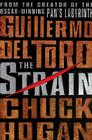
“The Strain" begins with a newly landed plane stopping dead on the runway. When the rescue crews arrive, they discover that all the passengers and crew are dead in their seats, with their necks cut and their bodies devoid of blood. This utterly original novel is absolutely fantastic and like no vampire novel I've read. You will love it!”
-- Jon Tobin, Saturn Booksellers, Gaylord, MI


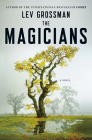
“The Magicians" is a darker, more adult take on the idea of a secret academy that trains would-be wizards. Lev Grossman explores the realms of magic, alternate realities, and wish fulfillment as visited by less-than-heroic characters. Raising the question of what would you do if you could do whatever you wanted, The Magicians is thrilling and deliciously disturbing.”
-- Lisa Wright, Oblong Books And Music,LLC., Millerton, NY


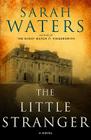
"The Little Stranger" follows the strange adventures of Dr. Faraday, the son of a maid who has built a life of quiet respectability as a country doctor. One dusty postwar summer in his home of rural Warwickshire, he is called to a patient at Hundreds Hall. Home to the Ayres family for more than two centuries, the Georgian house, once grand and handsome, is now in declineaits masonry crumbling, its gardens choked with weeds, the clock in its stable yard permanently fixed at twenty to nine. But are the Ayreses haunted by something more ominous than a dying way of life? Little does Dr. Faraday know how closely, and how terrifyingly, their story is about to become entwined with his.


Hailed by the "Chicago Tribune" as a tremendous talent, Nguyen infuses her first novel with humor, compassion, and insight, as she explores the story of estranged sisters and the cultural and family history that binds them.


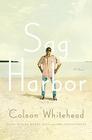
Colson Whitehead's Sag Harbor, a coming-of-age novel set in small community of African-American professionals in the Hamptons, is a masterpiece. Is Whitehead the greatest writer of his generation? He bids fair.”
-- Sarah McNally, McNally Jackson Books, New York, NY


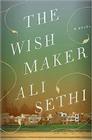
Chronicling world-changing events that have never been so intimately observed in fiction and brimming with unmistakable warmth and humor, "The Wish Maker" is the powerful account of a family and an era, a story that shows how, even in the most rapidly shifting circumstances, there are bonds that survive the tugs of convention, time, and history.


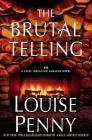
The peace of Three Pines is shattered when a stranger is found murdered in the village bistro and antiques store. Once again, Chief Inspector Gamache and his team are called in to strip back layers of lies, exposing long-buried secrets.


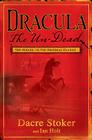
Written by a direct descendant of Bram Stoker and a well-known Dracula historian, "Dracula: The Un-Dead" is a bone-chilling sequel based on Bram Stoker's own handwritten notes for characters and plot threads excised from the original edition.

And best of all, from Quirk Books publisher of the New York Times Best Seller Pride and Prejudice and Zombies comes a new tale of romance, heartbreak, and tentacled mayhem!

Sense and Sensibility and Sea Monsters expands the original text of the beloved Jane Austen novel with all-new scenes of giant lobsters, rampaging octopi, two-headed sea serpents, and other biological monstrosities. As our story opens, the Dashwood sisters are evicted from their childhood home and sent to live on a mysterious island full of savage creatures and dark secrets. While sensible Elinor falls in love with Edward Ferrars, her romantic sister Marianne is courted by both the handsome Willoughby and the hideous man-monster Colonel Brandon.

Can the Dashwood sisters triumph over meddlesome matriarchs and unscrupulous rogues to find true love? Or will they fall prey to the tentacles that are forever snapping at their heels? This masterful portrait of Regency England blends Jane Austen’s biting social commentary with ultraviolent depictions of sea monsters biting. It’s survival of the fittest-and only the swiftest swimmers will find true love!

Have fun at the South Padre Island Seafood and Music Festival
and thanks for attending.

Saturday, September 12, 2009

What is a Classic?

I generally will read anything from the back of the cereal box to "War and Peace" but generally I must confess that I have a soft spot in my heart for the classics. I like the way good literature wraps a story or timeless idea with layers of meaning that allow me to experience a deeper truth which I would normally overlook in my daily life. Sainte-Beuve, the French essayist and critic, describes the classic author as one who:
has enriched the human mind, increased its treasure, and caused it to advance a step; who has discovered some moral and not equivocal truth, or revealed some eternal passion in that heart where all seemed known and discovered; who has expressed his thought, observation, or invention in no matter what form, only provided it be broad and great, refined and sensible, sane and beautiful in itself; who has spoken to all in his own peculiar style, a style which is found to be also that of the whole world, a style new without neologism, new and old, easily contemporary with all time.
As a bookseller, I want to seek out and share those authors and works that meet the standards as discussed by Sainte-Beuve. The wonderful thing is there is a vast body of work out there to choose from and a plethora of styles so it is possible for anyone to find an author he will enjoy reading and still be able to participate in the great conversation which has been going on throughout all ages and distances; the great conversation of ideas that are timeless and universal.

Thursday, August 27, 2009

Thinking About Banned Books Week


The last week of September is recognized by the American Library Association as Banned Books Week. I am in the process of thinking of some ways to recognize the need to be constantly aware of ongoing attempts at censorship in all forms. I know that as a bookseller I have argued with myself over what books to carry and when to say "I will not have that in my store".

For example, I am a political and news junkie and enjoy reading political commentary - when it is written with a clear, logical and reasoned approach. Much of what passes for commentary today is simply over-heated, hateful, divisive, partisan rhetoric which, in my opinion, adds little to the debate and certainly does not help us in reaching the goal of a well-informed electorate. Yet, when I considered not carrying some of the more egregious authors of these best-selling titles, I realized that I would be practicing my own style of censorship.


From the American Booksellers Foundation for Free Expression website supporting the recognition of Banned Books Week from September 26 - October 3, 2009:
Book censorship of all kinds – even book-burning – continues today. Challenges may come from parents, teachers, clergy members, elected officials, or organized groups, and arise due to objections to language, violence, sexual or racial themes, or religious viewpoint, to name just a few. In 2008, the ALA counted 513 challenges. Many other cases go unreported.

This year, for example, in Shelby, Michigan Song of Solomon by Toni Morrison was suspended from the curriculum after the superintendent ordered a teacher to remove the book from advanced English classes.

In Vineland, NJ, the principal of Landis Intermediate School literally tore pages out of the school's copy of the nationally acclaimed poetry anthology, Paint Me Like I Am, written by teens for teens after one parent raised concerns over the "age-appropriateness" of Jason Tirado's poem, "Diary of an Abusive Step-father." In West Bend, WI several books were challenged at the Community Memorial Public Library and the Library Board was accused of "promoting the overt indoctrination of the gay-agenda." In addition, the Christian Civil Liberties Union's Milwaukee branch filed a legal claim arguing its elderly plaintiffs suffered mental and emotional damage due to the book's presence in the public library's Young Adult section.

To be honest, I wrestle with these decisions daily. Am I being a literary snob when I don't order the latest Harlequin romance series book? Do I develop a separate section for "Christian literature"? How much do I preview the books in my Young Adult sections for content that some parents may find objectionable? How do I decide what "may be objectionable"?

With each question, I am becoming more and more convinced that I need to provide the materials, and generally let the market decide, although, I will always strive to find and stock quality literature of all genres, religious beliefs, and political positions even though it may be outsold by more popular titles.

If you have any suggestions, ideas, or are interesting in helping Paragraphs and South Padre Island recognize Banned Books Week, I would love to hear from you.

Friday, August 21, 2009

Fun for the Family - Summer Melodrama


Take a step back in time to the early days of family life in the Rio Grande Valley and join the fun as El Paseo Arts Foundation presents an old-fashioned melodrama where villains abound and an unexpected hero saves the heroine and wins the day.

Daniel R. Donohue’s, Villainy in the Valley (“Lucious’s Juices" "The Deadly Disappointment") a side-splitting romp that's overripe with cornball gags and a cast of zany characters will be staged on Monday, August 24th and Tuesday, August 25 at the South Padre Island Convention Center. Doors open at 6:30 with a cash bar available. The performance starts at 7:30 p.m. The play is co-directed by JoAnn Evans (SPI) and Jody Hughes (SPI).

In the great tradition of melodramas, Villainy in the Valley provides an evening of fun and family entertainment. The show depends on audience participation. Sigh for the dainty heroine, cheer for the hero, and boo and hiss the villain.

The show begins with an “olio”—a musical comedy revue with singing and lots of laughs. To set the mood the audience will join some of our local celebrities in a sing-a-long and practice booing the villain and cheering for the heroes. Then the curtain goes up on a cast of local personalities who bring to life the assorted characters of the town of Rio Arroyo.

Lucious Laseter, con man extraordinaire is intent on swindling Judge Angus McTate out of his citrus empire. This very rich and very gullible judge hopes that his long lost niece, the lovely, naive and fleet-of-foot Tess Trueheart McTate will marry his new accountant Laseter. However, Tess arrives with another, her beau, Bart Bo and Laseter conceives a dastardly plot to discredit Bart, kill the judge, and claim Tess and her fortune for his own.

Laseter is aided in his nefarious deeds by Floyd Coozy, an inept and dull-witted felon and his flamboyant twin sister, Floozy. Jo, the savvy bartender and owner of Christina’s cantina tries to take care of everyone, even Charlie the town drunk and poet lariat. If only, Marshall Mellow paid more attention to what was going on and spent less time bragging about his heroic feats. If only, Idona DuNada the reformer from Austin wasn’t always making trouble and trying to bring culture to Rio Arroyo.

Alas, it looks like Lucious Laseter may well succeed in evil plans and all seems lost for Tess including her beau, Bart. Poor Tess! Oh, woe! Will Lucious carry off Tess and her fortune? Will the Judge discover Lucious’evil scheming? Will Marshall Mellow ever stop taking about himself? Will Jo save her cantina from Idona DuNada’s sweeping reform? Will Tess and find true love at last? Will Floyd and Floozy ever figure out what’s going on? Will Charlie ever get another drink?

Don’t miss the chance to be part of the fun and find out the answers to these questions as the exciting and surprising finish unfolds.

Our friends and neighbors have been working very hard to provide an evening of entertainment for all of us to enjoy. Let's turn out and show them our appreciation for bringing community theatre to the Island.

Friday, August 7, 2009

Border Fence Divides In Unexpected Ways

Winter Texans watch construction of the border wall at the Old Hidalgo Pumphouse, which is also the site of the World Birding Center on the other side of the wall. Currently there is no access to the World Birding Center. Photo by Wendy Shattil.

Illegal immigration is often a hot issue in the political discussion, although it seems to come and go in its level of importance depending on what other national issues are being debated in the public arena. The "Border Fence" often is mentioned when one listens to the emotionally-charged rhetoric surrounding the control of illegal immigration. I have always had mixed feelings toward the concept of walling ourselves off from Mexico, or Canada for that matter, and have often doubted the effectiveness of the wall as a deterrent to illegal immigration. That was when I lived in Denver or NY and I can't say my opinion has changed since moving to South Padre Island.

However, living here, within 30 miles of the Mexican border, I can see that there are issues surrounding the building of a border wall that are rarely discussed or recognized outside the regions being directly affected. On a recent drive to Progresso, Mexico I noticed that much of the fence has been built, over or around the protests of many valley residents.

So today I was interested when Nancy Patterson posted a link on her Facebook page to a site discussing the impact of the fence on the bird and wildlife population in the Lower Rio Grande Valley. I can see you rolling your eyes and thinking, here we go again, some bird (probably the ubiquitous "common grackle") is going to hold up human development and jeopardize homeland security.

But, on South Padre Island, bird watching is one of the things that draws visitors to our sandbar. The Texas Gulf Coast is part of the massive migratory path followed by many species of birds as they travel to and from their summer and winter habitats. The construction of a World Class Birding Center on the Island is just one example illustrating how important our wildlife is to the economic well-being of this resort community.

Wading birds continue to utilize wetlands that provide a food source if no further disruption occurs. This barrier fence is near the Progresso border crossing in Hidalgo County. Photo by Wendy Shattil.

The article, written by Hugh Powell for the online newsletter of the Cornell School of Ornithology, All about Birds, states:
The U.S.-Mexico border in southern Texas is a busy place. The wide, flat streets of Brownsville, Harlingen, McAllen, and (just across the Rio Grande) Matamoros teem with dusty pickups, farm stands, tiny Tex-Mex restaurants, and more than 700,000 people. The region is a hotbed for beautiful and coveted birds, too: 516 species flit through the area’s distinctive mesquite, marshy resacas, and parched arroyos.
I was surprised to learn from this article that the lower Rio Grande Valley of Texas is consistently listed as being one of the top three busiest of the Border Patrol’s 20 sectors.

Powell continues:
By early 2009, just 70 miles remained to be built, most of it in the Rio Grande Valley. Construction is proceeding over the objections of local residents, who have claimed that the fence restricts friendly relations with Mexico, destroys swaths of their land, and sometimes strands their own houses on the south side of the fence

Partly because of the Rio Grande’s meandering route out to the Gulf of Mexico, planners routed the fence up to 2 miles north of the river, shortcutting the wider arcs. Nearly 200 landowners hold property within that narrow strip. Some have found their driveways cut off from the rest of the United States. Farmers have lost access to fields, and livestock have been cut off from river water. Until a recent agreement, the University of Texas at Brownsville faced the prospect of the fence dividing their campus in two.

These same problems confront the birds and other animals that call the region home. There’s very little natural habitat left to begin with. Most of the 1.5-million-acre Rio Grande Valley has been converted into farmlands and homes. What’s left over are small patches of green space scattered over 200 miles.

More than 100 of these remnants totaling about 90,000 acres are now protected as the Lower Rio Grande Valley National Wildlife Refuge, the result of three decades of work and planning by land managers. The border fence, its access roads, and the associated construction areas cross these parcels in a half-dozen places, cutting slices from what habitat remains.

Perhaps more problematic for wildlife is the way the fence blocks movement between the few patches that can support them. Animals whose range barely juts into the U.S. may find themselves cut off from relatives, prospective mates, and suitable empty territories. Many terrestrial animals can’t get around or over the fence, and are more vulnerable to predators on its access roads. While birds might seem to have an easier time going over the fence, research has shown that many forest birds are extremely reluctant to cross gaps of unfamiliar or open habitat.

In this video public outreach specialist Nancy Brown introduces the Santa Ana National Widlife Refuge and some of the lower Rio Grande Valley's most notable birds. She outlines some of the U.S. Fish and Wildlife Service’s ecological concerns about the U.S.-Mexico border fence's possible effects.

Pictures are from the International League of Conservation Photographers

Thursday, August 6, 2009

First Dogs in Texas - Go Figure


American Presidents and Their Best Friends

By Roy Rowan and Brooke Janis
Paperback , 163 pages (also available in Hardback)
ISBN: 9781565129368 (1565129369)
Published by Algonquin Books
$9.95(US)

I ordered this book last month and have watched as many of our customers glance at the eye-catching, face-out, publishers display and then walk on by. Now these are the same people that are seriously looking at and buying our other dog, cat and pet titles and have purchased some of our dog pull toys or dog and cat dishes.

Griff and I were baffled until he remarked that he thought the cover photo of our new President and Bo may be what was causing the problem. I found this hard to believe until just now when a lovely woman told me specifically that if the book had a different cover she may have been interested. "We are in Texas" she reminded me nicely.

So just for the record, this is a wonderful book full of all kinds of interesting stories about First Dogs beginning with the presidency of George Washington and continuing up to and including yes, President Obama.

From the publisher:
"If you want a friend in Washington, get a dog," Harry Truman once said. Perhaps that's why, for much of our Republic's history, there have been two top dogs at 1600 Pennsylvania Avenue—one with two legs, one with four. First Dogs, by distinguished journalist Roy Rowan and researcher Brooke Janis, tells the whole doggone story, from the days before there was a White House to Barack Obama’s newly adopted presidential pup, Bo.

Here's a lighthearted romp through American history, packed with drawings and paintings from early America, plus photographs, starting with Abraham Lincoln's Fido. Not only did these four-footed goodwill ambassadors humanize their distinguished masters, they offered them a little unconditional love in a loveless town.

First Dogs gives dog lovers and history lovers a new angle on presidential history and is more fun than you can shake a stick (or rubber bone) at.

Hiroshima Remembered

Those of us that grew up during the Cold War have memories of civil defense drills and the proliferation of bomb shelters all of which were supposed to protect us from the devastating effects of a potential nuclear bomb strike.

The mushroom cloud became the image of ultimate destruction which the advancement of science had made available to man -- the latest in a long line of tools of war.

Today marks the 64th anniversary of the dropping of the bomb "Little Boy" from the B-29 bomber Enola Gay on the Japanese city of Hiroshima.

Shortly after 8:15 am, August 5, 1945, looking back at the growing "mushroom" cloud above Hiroshima. When a portion of the uranium in the bomb underwent fission, and was transformed instantly into an energy of about 15 kilotons of TNT (about 6.3 × 10¹³ joules), heating a massive fireball to a temperature of 3,980 C (7,200 F). The superheated air and smoke rapidly rose through the atmosphere like a giant bubble, dragging a column of smoke up with it. By the time this photo was made, smoke had billowed 20,000 feet above Hiroshima while smoke from the burst of the first atomic bomb had spread over 10,000 feet on the target at the base of the column. (U.S. National Archives)
From yesterday's Boston Globe:
The U.S. B-29 Superfortress bomber "Enola Gay" took off from Tinian Island very early on the morning of August 6th, carrying a single 4,000 kg (8,900 lb) uranium bomb codenamed "Little Boy". At 8:15 am, Little Boy was dropped from 9,400 m (31,000 ft) above the city, freefalling for 57 seconds while a complicated series of fuse triggers looked for a target height of 600 m (2,000 ft) above the ground. At the moment of detonation, a small explosive initiated a super-critical mass in 64 kg (141 lbs) of uranium. Of that 64 kg, only .7 kg (1.5 lbs) underwent fission, and of that mass, only 600 milligrams was converted into energy - an explosive energy that seared everything within a few miles, flattened the city below with a massive shockwave, set off a raging firestorm and bathed every living thing in deadly radiation. Nearly 70,000 people are believed to have been killed immediately, with possibly another 70,000 survivors dying of injuries and radiation exposure by 1950.
The article from the Boston Globe has some magnificent photos well worth viewing.

The classic little book Hiroshima by John Hersey is one of those must-reads for every age.

First published on August 31, 1946 when The New Yorker devoted an entire issue to telling of the effects of the atomic bomb dropped on Hiroshima, it
Follows the fate of six survivors and describes their experiences. The survivors were: Miss Toshiko Sasaki, a clerk in the personnel department of the East Asia Tin Works; Dr. Masakazy Fuji; Father Wilherlm Kleinsorge, a German priest of the Society of Jesus, the Rev. Kiyoshi Tanimoto, pastor of the Hiroshima Methodist Church, and a Mrs. Hatsuyo Nakimura, a tailor's widow and her three children.
The New Yorker
Forty years later John Hersey went back to Hiroshima in search of the people whose stories he had told and in 1985 the book was republished with a final chapter that provides his moving account of what he discovered.

Hersey's book will keep the human story of that horrific day in history alive for future generations. The first sentence illustrates the author's spare and poignant writing style.
AT EXACTLY fifteen minutes past eight in the morning, on August 6, 1945, Japanese time, at the moment when the atomic bomb flashed above Hiroshima, Miss Toshiko Sasaki, a clerk in the personnel department of the East Asia Tin Works, had just sat down at her place in the plant office and was turning her head to speak to the girl at the next desk.